
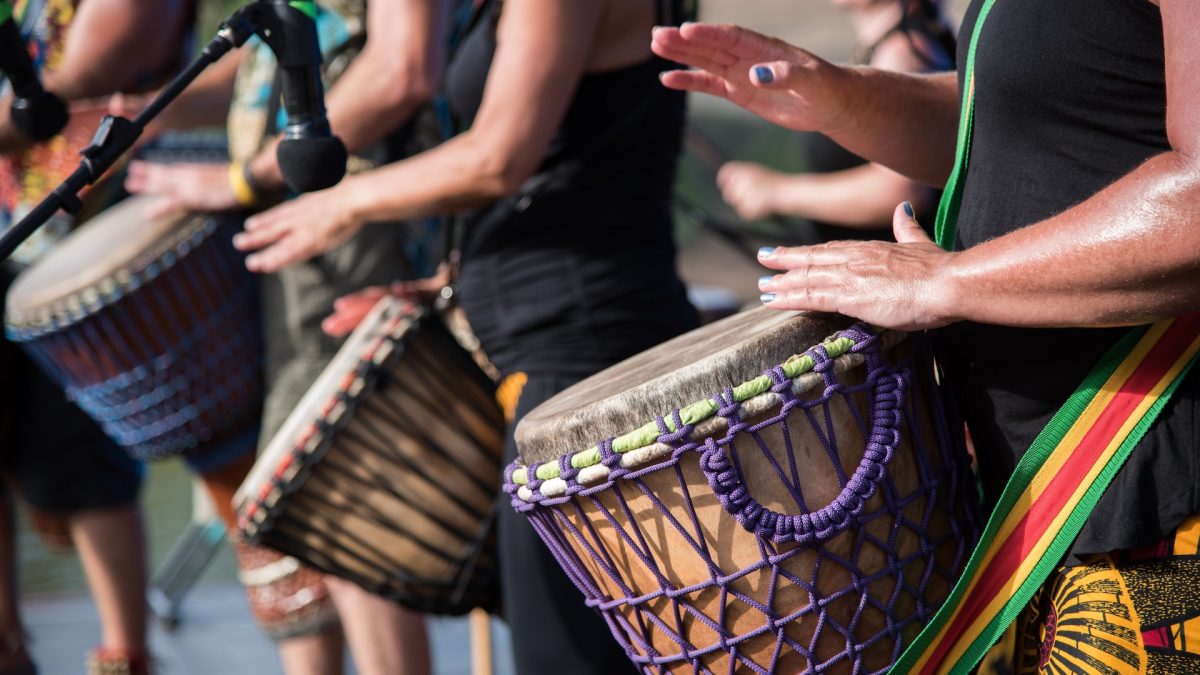
Have you ever noticed that everyday activities such as
sleeping, walking, and even breathing are cyclic?
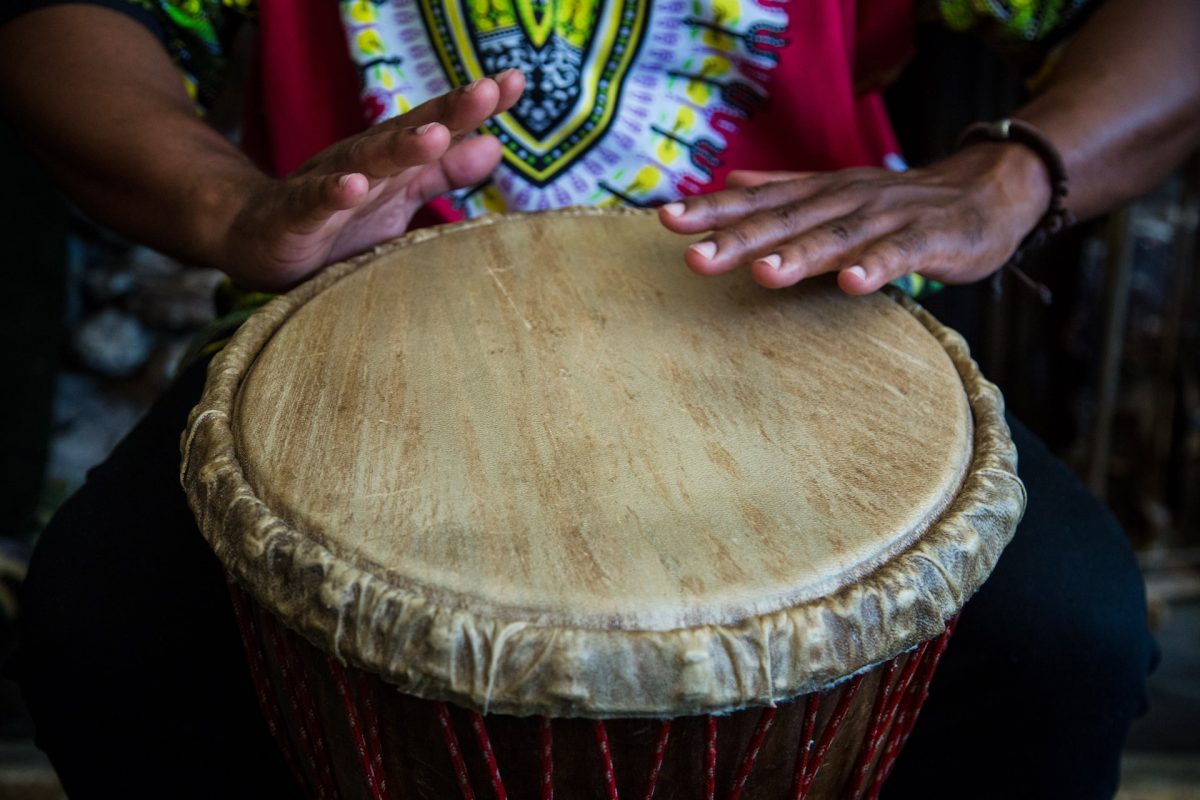
Have you ever noticed that everyday activities such as sleeping, walking, and even breathing are cyclic? Our bodies have internal rhythms, following patterns that repeat in time and seem to be in tune with our external environment. As Leon Glass highlights these physiological rhythms are crucial to life. But have you ever wondered how our internal rhythms help us cope with our everyday life?
Our brain possesses an internal rhythm, neuronal activity is the result of patterns of high and low excitability that can track and reset to external rhythmic events such as music and speech. These brainwaves can synchronize to a rhythmic external event, this is known as entrainment. This requires a tracking ability and matching of these internal brain rhythms to important events of the external stimuli, for instance, the beat in a song, this leads to a resetting of the brainwaves to match the external stimuli.
Entrainment has been studied extensively in the last decades, especially in music. You have all probably experienced the irresistible sensation of tapping to the beat when you are listening to a song.
Imagine, that our brains can track and identify the repeated patterns in the music, and this tracking ability allows us to reset our internal rhythms to match the external ones given by the music. Entrainment is important because this synchronization allows us to predict what is coming next, and when, facilitating detection and processing of events, and therefore, minimizing uncertainty.

Have you ever thought that many of the things we do in our daily lives are the result of our fear of uncertainty? Setting an alarm clock, planning our meals, checking the weather forecast. Predictability is important for humanity because predictability is essential for our cognitive processing of information, and our survival. As humans, we like to have things under our control, and when we feel like we do not, we start to feel anxious, scared, and frustrated, and we might start to struggle with our mental health.
Since 2020 during the breakout of the pandemic, worldwide populations experienced anxiety symptoms, people were having difficulties sleeping, eating, and concentrating, they had a constant fear of getting sick, dying, or losing their loved ones, and even experienced physical symptoms such as trembles, stomachaches, sweating and difficulties breathing. Have you also experienced any of these symptoms? have you wondered why anxiety was common during this time? Because the pandemic represented what we fear the most, uncertainty.
The good news is that now you are aware that we are capable of entrainment. Knowing that our brains are designed to detect patterns, track, and adapt to them, to improve our predictability of what seems sometimes a very chaotic and random world, can help us see that as humans we are born with a resilient nature, this can help you have a different perspective on life events and on how you cope with them.
Life is a cycle and all the events on them are as well. Everything that starts comes to an end, the good, the bad, the tragic, and all the thoughts and emotions that are elicited as results of these events as well. Our brains are constantly seeking patterns, tracking them, and resetting them, to help us reduce the uncertainty, to help us prepare a bit more for what is coming next, this is what entrainment does with music and speech, but I would argue this is what we do to thrive as well.

Resilience is rhythmic, it is not fixed. As Windle mentions, it is a dynamic process of self-organization of resources to deal with different sources of stress, allowing us to adapt and “bounce back”. When a traumatic or highly stressful event occurs, the shock is so intense that can make people tumble or even fall, what follows next is readjusting one’s resources and life overall, and slowly the person adapts to his new life circumstances, even new skills, abilities or new perspectives might have come out of it, and then life strikes again, and the cycle starts all over, but this time previously acquired knowledge and skills accompany us.
Reflecting on the rhythmicity of our brains and lives, can help us realize that we are all capable of entrainment, and therefore resilience, and that above all the uncertainty of the world, our brains will keep on tracking our environment and all of our life events, they will try to match and reset to them if needed. It would make us a bit more prepared for what is coming next, because it has done it in the past, and for sure will do it again.
Isn’t it reassuring? to know that despite the uncertainty and the randomness of life itself, our brains are doing the best they can to give us what we strive for the most, predictability? Next time you are struggling with something, and you start to feel like you are losing control, remember you have the best ally, your brain, and your body because we evolved to be resilient.
References
Arnal, L. H., & Giraud, A. L. (2012). Cortical oscillations and sensory predictions. Trends in Cognitive Sciences, 16(7), 390–398. https://doi.org/10.1016/j.tics.2012.05.003
Giraud, A. L., & Poeppel, D. (2012). Cortical oscillations and speech processing: Emerging computational principles and operations. Nature Neuroscience, 15(4), 511–517. https://doi.org/10.1038/nn.3063
Leon Glass. (2001). Synchronization and rhythmic processes in physiology. Nature, 410(March), 277–284. https://doi.org/10.1038/35065745
Peelle, J. E., & Davis, M. H. (2012). Neural oscillations carry speech rhythm through to comprehension. Frontiers in Psychology, 3(SEP), 1–17. https://doi.org/10.3389/fpsyg.2012.00320
Schroeder, C. E., & Lakatos, P. (2009). Low-frequency neuronal oscillations as instruments of sensory selection. Trends in Neurosciences, 32(1), 9–18. https://doi.org/10.1016/j.tins.2008.09.012
Windle, G. (2011). What is resilience? A review and concept analysis. Reviews in Clinical Gerontology, 21(2), 152–169. https://doi.org/10.1017/S0959259810000420