

From my personal experience and as a psychologist
*Trigger warnings for description of street sexual harassment
También disponible en Español aqui http://mindmatterspsy.on-forge.com/acosocallejeroysaludmental/

What is trauma?
The DSM V defines trauma as exposure to actual or threatened death, serious injury, or sexual violence. Giulio Perrotta broadens this definition and describes trauma as those events that generate helplessness and vulnerability, causing stress levels so severe that they threaten the integrity of the person’s psychophysical balance. Taking both definitions as a reference, we can consider that events such as the loss of a loved one, the loss of a job, and any other event that is considered threatening to well-being can be considered trauma. If we only follow the second definition, then the question arises: what is the difference between trauma and adversity?
The difference could be in the psychosocial effects on the person after the event. How much do thoughts, emotions, and physical and behavioral symptoms change after the event?
Street harassment has been so normalized, could we perceive it as a traumatic event. In this post I will state from my story, that street harassment can be perceived by many women as a traumatic event and therefore brings consequences to mental health and well-being.

The night of December 10, 2022
I currently live in Budapest, Hungary, a city where I have always felt safe, many times I have returned home alone in the middle of the night without any problems. I have lived here for five years, and only a couple of times I have run into men who have followed me or said something uncomfortable to me in the street, so despite walking in desolate streets I was not afraid to walk alone. I come from a country where returning at three in the morning alone is almost a death sentence, the numbers of femicides and sexual violence in Ecuador are very high, so the thought of “but it was not so bad what happened to you, women in your country are exposed to more dangers” arises in an attempt to deny that what I experienced was a traumatic event and therefore deny the impact it had on me.
On the night of December 10 or more specifically in the early morning of December 11, at 3 am I was returning home after being at a friend’s birthday party. It was a winter day and it was raining that day, so I was walking with my umbrella and my long winter coat with the hood covering my head.
From the bus stop to my house is maybe seven minute’s walk, I do not know at what point my aggressor began to follow me. When I was already on the street of my house, I heard someone talking in Hungarian behind me, but I did not pay attention I thought it was not with me, this man managed to catch me and start walking next to me, he kept talking to me, I shook my head that I did not understand and kept walking. He kept insisting and I told him in Hungarian that I did not speak Hungarian, at this moment I saw how he made an effort to translate what he wanted to say into English, so I stopped because my thought was “if he is making an effort to tell me in English, maybe he needs my help”.
The man said something to me that I didn’t understand, so I told him I was sorry but I didn’t understand and I started to walk again, but he kept walking next to me, and he said “have sex with me”, I found it so shocking that I think I stopped walking again, I remember saying no, and kept walking, but he kept walking next to me, insisting me.
At this point the memories start to become fuzzy, I know that he kept insisting that I said no, and at one point without me expecting it he grabbed my breasts and still would not leave. I became filled with a sense of anger that I had not experienced before, now I understand that it was my body’s fight or flight response to the threat.
I hit him with the umbrella which was the only thing I had in my hand and I held it as a barrier between me and him, in case he wanted to approach me again, I yelled at him to go away, to leave me alone, but he still wouldn’t leave, I wanted to keep hitting him with the umbrella, but I stopped because two scenarios came to my mind. If I keep hitting him, he will get angrier and may continue attacking me or if I hurt him, he is the one who can press charges since he would have the evidence of the aggression and I would not, and being a foreign woman, not Hungarian from a “third world” country, I would have the most to lose.
Several minutes went by and he finally gave up and left and insulted me, I rushed home, and there I realized how much I was shaking, that day I cried myself to sleep. The next day I could not get out of bed, my body felt completely worn out, a normal response when the flight or fight response is activated.

The aftermath of the attack
The next few days passed, but the feeling of insecurity never went away again. Just a week later leaving a dinner with friends at 11:30 at night, I realized how easily startled I was.
There was a group of drunk men on the streetcar and I couldn’t help thinking “they are going to approach me, they are going to say something to me”, I started to think that they might follow me, it wasn’t like that, clearly it was just my mind, but as I kept walking and kept running into men with dark coats similar to what he was wearing, it was inevitable for me to keep thinking “what if he comes back”, “what if I run into him again”, “maybe he saw where I came in”, “maybe he will come back for more” and with all those thoughts in my head it was inevitable that the flight or fight response was activated again and I started to feel my anxiety levels rising to such an extent that it became difficult to breathe and I started to dissociate, I had to tell myself several times “you will be home soon, you are only two minutes away” to calm myself down, I concentrated on breathing and walking faster almost to the point of running and as soon as I got home, I started to cry again.
And the next day again the feeling of tiredness, but also a sense of defeat, that he was winning if I from now on live in fear of going out alone, and that was the reason why I did not want to stay locked at home because I know that avoidance only increases anxiety, but it was clearly too early for me to walk alone at night on the street. The next few weeks went by “normally”, but now I look back and realize that I was clearly experiencing symptoms of acute stress reaction according to DSM V.
Some of the symptoms I experienced were that the images and sensations of what happened to me would come to my mind suddenly, and I would relive everything I felt, it was difficult to concentrate, sometimes I just wanted to cry, I did not sleep well, or I would tense my jaw while sleeping (bruxism), I was easily startled and if I saw that it was getting dark (at 4 pm in winter) I would think “no, it is already dark, I better not go out”.
There were several thoughts in my mind, but the most frequent were “what if I meet him again”, and “what if he comes back for me” but it was also a strange feeling of guilt. I did not feel guilt for having walked alone at 3 in the morning, it is my right to walk wherever I want and whenever I want, but I felt guilty that it was costing me to face this event knowing that I am not the first nor the last, that there are women in my life who have lived worse cases of harassment and sexual violence, and that this is a reality for women in my country on a daily basis, I thought that maybe I was doing “drama” for nothing, that I should handle this alone and that with time the fear would diminish.
What I needed was to acknowledge that what I experienced was traumatic for me, that I developed an acute stress reaction, and that until four weeks after what happened, I was not well. To acknowledge that I felt angry and afraid that it would happen again, but also in fear of how very vulnerable I felt realizing that if that man had wanted to rape or kill me right then and there nothing would have stopped him.
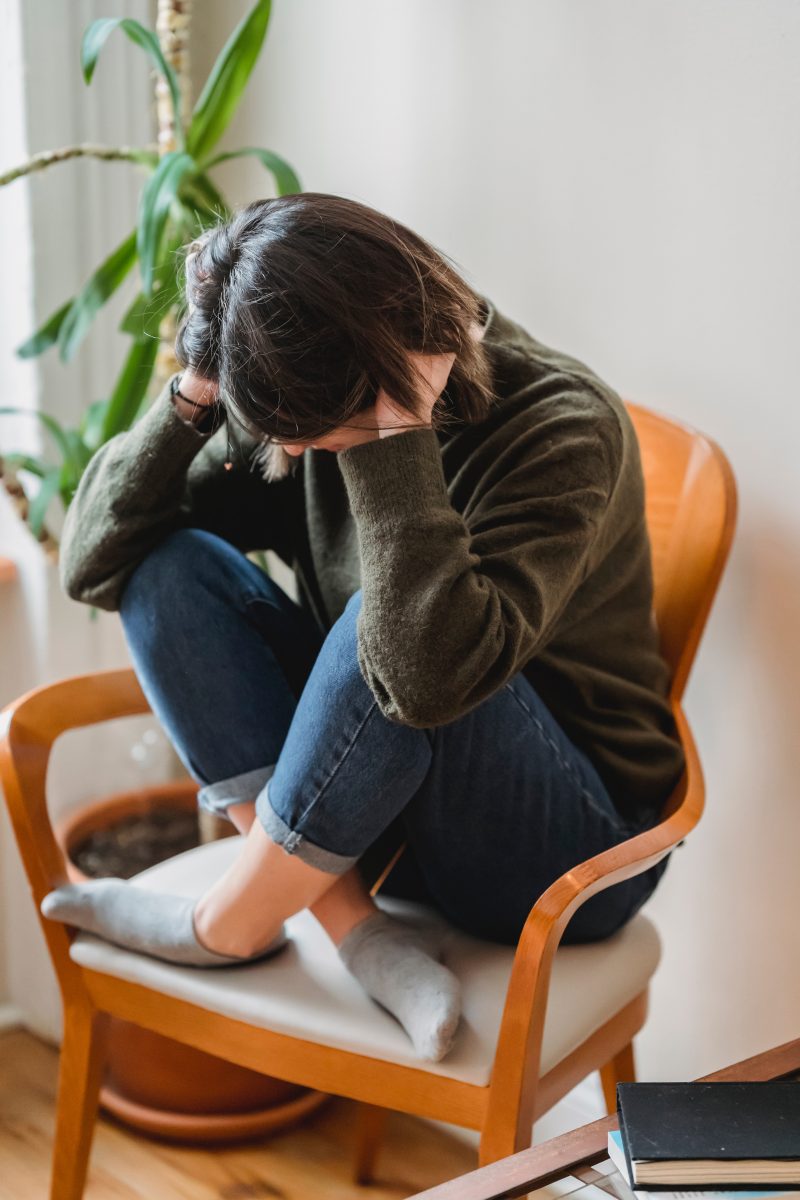
How does street harassment impact women’s mental health?
The first step that helped me was to recognize that it was a traumatic event, and the second was to find studies that have indeed found that street harassment and other types of harassment such as workplace and school harassment are associated with post-traumatic stress symptoms. Recognizing that thousands of women have experienced symptoms similar to mine helped me to feel my experience as valid and to understand what was happening to me, especially to reduce the guilt.
Street harassment is considered a type of sexual victimization and therefore meets the DSM V definition of trauma. It has also been found that the presence of feelings of guilt, shame, and the perception of the possibility of rape in victims can contribute to triggering acute stress symptoms that can then develop into post-traumatic stress disorder.
Thoughts such as “I shouldn’t have walked around alone,” “I shouldn’t have worn that,” “I shouldn’t have stopped” may be common thoughts in women who have been assaulted, from a perspective that places responsibility on the victim.
Another way to identify whether the experience was lived as a traumatic event is if there are changes in the way the person sees herself, others, and others. Seeing the world as “an unsafe place” or seeing oneself as “damaged or dirty” beliefs can affect interpersonal relationships and how the person functions in different areas of his or her life.
Studies also mention that it is common for women after the event to avoid places or situations similar to those of the event, such as walking down other streets, changing their clothing, carrying some type of self-defense weapon, or asking another person to accompany them,, sharing location in real-time, all of these are considered safety behaviors, precautions that the person takes to reduce anxiety levels and that it is believed can avoid or reduce the probability of the feared scenario or event occurring.
As you may have recognized all of us women tend to take “these precautions” if we walk alone, especially at night, it helps us feel safer but it also has the risk that if one day we do not follow them and the feared event happens, that is when the guilt and shame arises. When the guilt and shame should be on the aggressor.
What can we do when we have been victims of harassment and we feel that it continues to affect us?
- Recognize if we have any of the symptoms mentioned above.
- Share what happened to people we trust
- Recognize what thoughts come to our mind, are they based on reality or is it fear and/or trauma talking?
- Performing breathing or mindfulness exercises when we feel our anxiety levels are rising
- Try self-affirmations such as the following “I am safe, I am safe right now, this is just a memory” “This image was just a memory, I am safe now”.
- Mindfulness exercises and self-affirmations help us bring our minds back to the present, and regain a sense of safety.
- Remember to turn to your support network and do activities that you enjoy or that bring you pleasure.
- If the symptoms persist for more than a month and you consider that they are affecting your functioning in different areas of your life, go to a professional psychologist.

How am I doing now?
It is still difficult for me to walk at night alone, and I am easily startled, but my anxiety levels have gone down, and I no longer experience the intrusive images as before, I know it will take time for the fear to reduce further. And as a psychologist, I know that if the symptoms persist I must attend psychological consultation.
However, when I think of Budapest and the world in general a thought arises “no city is completely safe for a woman” and I know it is a result of trauma, since I used to see Budapest and Europe in general as safe, it is a thought that is perhaps not so far from reality so it will take time for me to debate it, but for now, it will rule my life, and make me “more cautious”. For now, I will have to resort to safety behaviors like carrying pepper spray or asking someone to accompany me if I feel it’s too late, but I don’t want that thought to run my life forever.
I want to go back to enjoying walking and getting lost in a city that I love and that is especially beautiful at night, for now, it is not possible for me, but I know that eventually, I will be able to walk again without fear beside the Danube at night. Today I take the guilt and shame away from me, our aggressors are the ones who should carry them, not us.
If something similar has happened to you or you have experienced other types of violence, if you want to share your story, contact me, let’s talk, you are not alone!
References
Avina, C., & O’Donohue, W. (2002). Sexual Harassment and PTSD: Is Sexual Harassment Diagnosable Trauma? Journal of Traumatic Stress, 15(1), 69–75. https://doi.org/10.1023/A:1014387429057
Carretta, R. F. (2018). Stranger Harassment and PTSD Symptoms : Roles of Self-blame , Shame , Fear , Feminine Norms and Feminism.
De Judicibus, M., & McCabe, M. (2001). Blaming the target of sexual harassment. Sex Roles, 44, 401–407.
McDermut JF, Haaga DA, Kirk L. An evaluation of stress symptoms associated with academic sexual harassment. J Trauma Stress. 2000 Jul;13(3):397-411. doi: 10.1023/A:1007725022534. PMID: 10948481.
Perrotta, G. (2020). Psychological Trauma: Definition, Clinical Contexts, Neural Correlations and Therapeutic Approaches Recent Discoveries. 2019(September), 1–6.
Weiss, K. G. (2010). Too Ashamed to Report: Deconstructing the Shame of Sexual Victimization. Feminist Criminology, 5(3), 286–310. https://doi.org/10.1177/1557085110376343
Websites